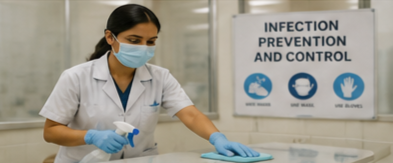
Infection prevention is sustained by everyday behaviours, reliable systems, environmental practices and a culture of shared responsibility.
Infection prevention and control is one of the clearest examples of how everyday professional practice influences patient and community wellbeing. It depends on a combination of knowledge, behaviour, environment, equipment, surveillance and organisational systems.
Hand hygiene is important, but infection prevention cannot be reduced to one behaviour. Appropriate use of personal protective equipment, safe handling of sharps and waste, cleaning practices, equipment reprocessing, respiratory hygiene and correct isolation precautions all contribute to a safer care environment.
Consistency matters because risk can change from one patient, procedure and setting to another. Professionals therefore need both foundational knowledge and the ability to apply local protocols correctly. Education should include the reasoning behind a precaution, not just the instruction itself, so that people can recognise when a different response is required.
A learning culture also matters. Teams should be able to discuss gaps, observe practice, review trends and improve systems. When infection prevention becomes part of routine professional identity, safer behaviour is more likely to become reliable behaviour.
ACCEND perspective: continuing education should make essential health and safety knowledge practical, understandable and connected to the realities of care delivery.